Informational only, not legal advice. ADU rules change often and differ by city. Confirm with your local planning department before you rely on anything here.
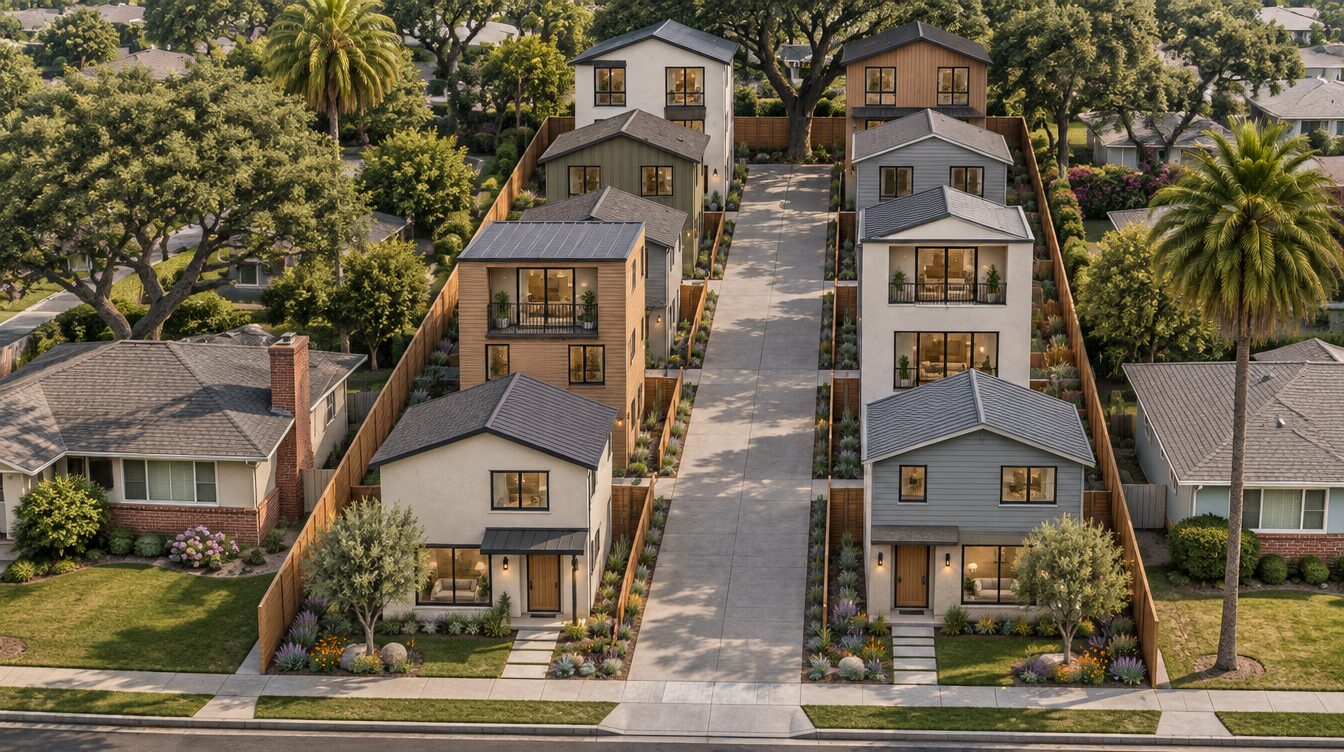
SB 1116, by Senator Anna Caballero (D-Merced), was approved by Governor Newsom on September 29, 2026 and chaptered as Chapter 808, Statutes of 2026. It passed the Assembly 72-0 on August 25 and the Senate concurred 40-0 on August 26. It is the second rewrite of the Starter Home Revitalization Act, the SB 684 and SB 1123 path that lets you split a lot into up to 10 parcels and build a home on each with no hearing. The changes apply only to applications a city receives on or after January 1, 2027, and almost every one of them makes more lots pencil.
If you were planning an SB 684 or SB 1123 project, the 2027 rules are friendlier: smaller individual parcels with averaging, at least a 1.25 floor area ratio, front setbacks capped at 10 feet, height measured in feet rather than floors, and a 60-day clock on the final map. If your project works better under the new rules, it may be worth filing in January rather than December. Not legal advice; confirm the timing with a land-use attorney before you decide.
The SB 684 changes in 2027, at a glance
| Rule | Before (filed through December 31, 2026) | SB 1116 (filed January 1, 2027 or later) |
|---|---|---|
| Smallest parcel | 600 sq ft (1,200 on single-family land) | 480 sq ft (960 single-family) if the average stays at 600 (1,200) |
| Density | Project must reach 66% of the zoned maximum density or 66% of the housing-element default density, whichever is greater | No minimum-density floor; instead base zoning must allow no more than 15 units (or 26,250 sq ft of residential floor area where zoning sets no unit cap) |
| Floor area ratio | City cannot impose a FAR below 1.0 for 3–7 homes or below 1.25 for 8–10 | City cannot impose a FAR below 1.25, whatever the home count |
| Front setback | Zone setback (side and rear capped by the SB 9 rule) | No more than 10 feet; no internal setbacks between new parcels beyond the building code |
| Height on single-family lots | No less than the zone's height limit | Same, but measured only in feet; a city can't cap the number of floors |
| Final map | No set deadline | Approve or deny within 60 days of a complete application, or it is deemed approved |
| Floor area counted | Average 1,750 net habitable sq ft, stairs included | Same 1,750 average, but stairs and enclosed bike parking excluded |
Smaller parcels with lot-size averaging
The 600 and 1,200 square-foot minimums stay, but they become averages. On a multifamily-zoned lot, one parcel can drop to 480 square feet as long as the new parcels average at least 600; on single-family land, 960 as long as they average 1,200. No single new parcel can be more than half of the original lot, and a designated remainder parcel is left out of the math. A city can still go smaller by ordinance.
In practice this lets a designer fit narrow lots where the site is narrow instead of forcing ten identical rectangles onto an irregular parcel.
FAR, setbacks and height: the standards that killed projects
SB 684 projects have mostly died on local standards that allow 10 parcels but not 10 livable homes. SB 1116 tightens Government Code section 65852.28. A city cannot impose a floor area ratio below 1.25 on any project (the old floor was 1.0 for projects of three to seven homes), a front setback from the original lot line greater than 10 feet, or setbacks between the new parcels beyond what the building code requires. On single-family lots, height limits now "apply exclusively to the physical height of the building and shall not restrict the number of floors", so a 30-foot limit can hold three stories if the plans fit. Side and rear setbacks still follow the SB 9 rule of no more than four feet, and the section is to be "interpreted liberally in favor of producing the maximum number of total housing units."
That 1.25 FAR is worth running on your own lot: on a 6,000 square-foot parcel it guarantees at least 7,500 square feet of home, enough for five 1,500 square-foot townhomes. Your city's other objective standards still apply, so check your city's zoning code for anything that would still cut that number.
Who qualifies now: the new eligibility test
The old minimum-density requirement is gone. In its place, the site's base zoning (ignoring density bonus, ADU allowances and overlays) must allow no more than 15 units, or, where the zone has no unit cap, no more than 26,250 square feet of residential floor area. The "substantially surrounded by urban uses" test is replaced by the infill-site criteria in Public Resources Code section 21080.66, the CEQA infill exemption from 2025. Vacant single-family lots stay capped at one and one-half acres, and "vacant" now includes a lot whose only structure is abandoned or uninhabitable under the Civil Code habitability standards.
SB 1116 also voids deed restrictions and CC&Rs that effectively prohibit or unreasonably restrict building, using or selling qualifying homes, except inside an existing common interest development. And cities must report these projects in their annual housing element progress reports to HCD.
How it fits with ADUs, SB 9 and AB 1751
Two limits carry over. A city still doesn't have to allow ADUs or JADUs on parcels created this way, and the lot you split can't itself have been created by an earlier SB 684 split or an SB 9 lot split. So pick the pathway before you design: a lot with a good house is usually an ADU or SB 9 play; a vacant or tear-down lot is where SB 684 shines; and a site too big for 10 homes may fit the new AB 1751 townhome law, signed the same day. Our SB 684 and SB 1123 guide covers the base rules. Send us the parcel and we'll run it under both the 2026 and 2027 rules.
Frequently asked questions
What does SB 1116 change about SB 684?
For applications received from January 1, 2027: parcels down to 480 square feet with averaging, no FAR below 1.25, front setbacks capped at 10 feet, height measured in feet, a new eligibility test in place of the density floor, and a 60-day deemed-approved final map clock.
What is the minimum lot size under SB 684 in 2027?
Still 600 square feet on multifamily-zoned land and 1,200 on single-family land, but with averaging an individual parcel can go down to 480 or 960 square feet as long as the average stays at 600 or 1,200. Cities can adopt smaller minimums by ordinance.
Can a city stop an SB 684 project with an HOA rule or CC&Rs?
SB 1116 makes deed restrictions that prohibit or unreasonably restrict building, using or selling qualifying new homes void and unenforceable, except for property inside a common interest development such as a condo or HOA community.
Does SB 1116 apply to my SB 684 application filed in 2026?
No. The amendments apply only to applications a local agency receives on or after January 1, 2027.
Official bill text
- SB 1116 — Planning and zoning: housing development projects: subdivisions. (official bill text, California Legislative Information)
- SB 684 — Land use: streamlined approval processes: development projects of 10 or fewer residential units on urban lots under 5 acres. (official bill text, California Legislative Information)
- SB 1123 — Planning and zoning: subdivisions: ministerial review. (official bill text, California Legislative Information)
- AB 1751 — Missing Middle Townhome Ownership Act. (official bill text, California Legislative Information)
Sources
- SB 1116 (2025-26): status, votes and chaptered text — Approved by the Governor September 29, 2026; Chapter 808, Statutes of 2026; Assembly 72-0 on August 25, Senate concurrence 40-0 on August 26, 2026
- Governor Newsom signs housing legislation (September 29, 2026) — Signing release listing SB 1116 by Senator Anna Caballero
- Brownstein: California enacts another wave of 2026 housing bills — Summary of SB 1116 changes to the Starter Home Revitalization Act
- Brownstein: SB 1116 and AB 1751, renewed efforts to expand missing middle housing — Background on both bills
- SB 1116
- SB 684 changes 2027
- SB 1123
- Starter Home Revitalization Act
- small lot subdivision California
- SB 684 minimum lot size 480 square feet
- SB 684 FAR and setbacks
- 10 homes on one lot California
- Caballero housing bill
Stay ahead of the next ADU bill.
New California housing bills, what they mean for your lot, and news from Parcy and Kaz Capital Group. A few emails a month.
Informational only. Not legal, architectural, or investment advice. Confirm current rules with your local planning department.